Moving Towards a More Sustainable Offshore Future
For Olympic, that means looking across the entire business. How can vessels use less energy? How can new technology reduce emissions? How can operations become more efficient? And how can Olympic continue to create a safe, responsible and attractive workplace for the people behind them?
The long-term direction is clear: Olympic is working towards net-zero emissions by 2050, while continuing to support the energy infrastructure society depends on.
But getting there requires progress on many fronts.
Building a More Efficient Fleet
For a vessel owner, some of the greatest opportunities to reduce environmental impact are found in the fleet itself. That is why Olympic continues to invest in vessels, technologies and operational improvements designed to achieve more with less energy.
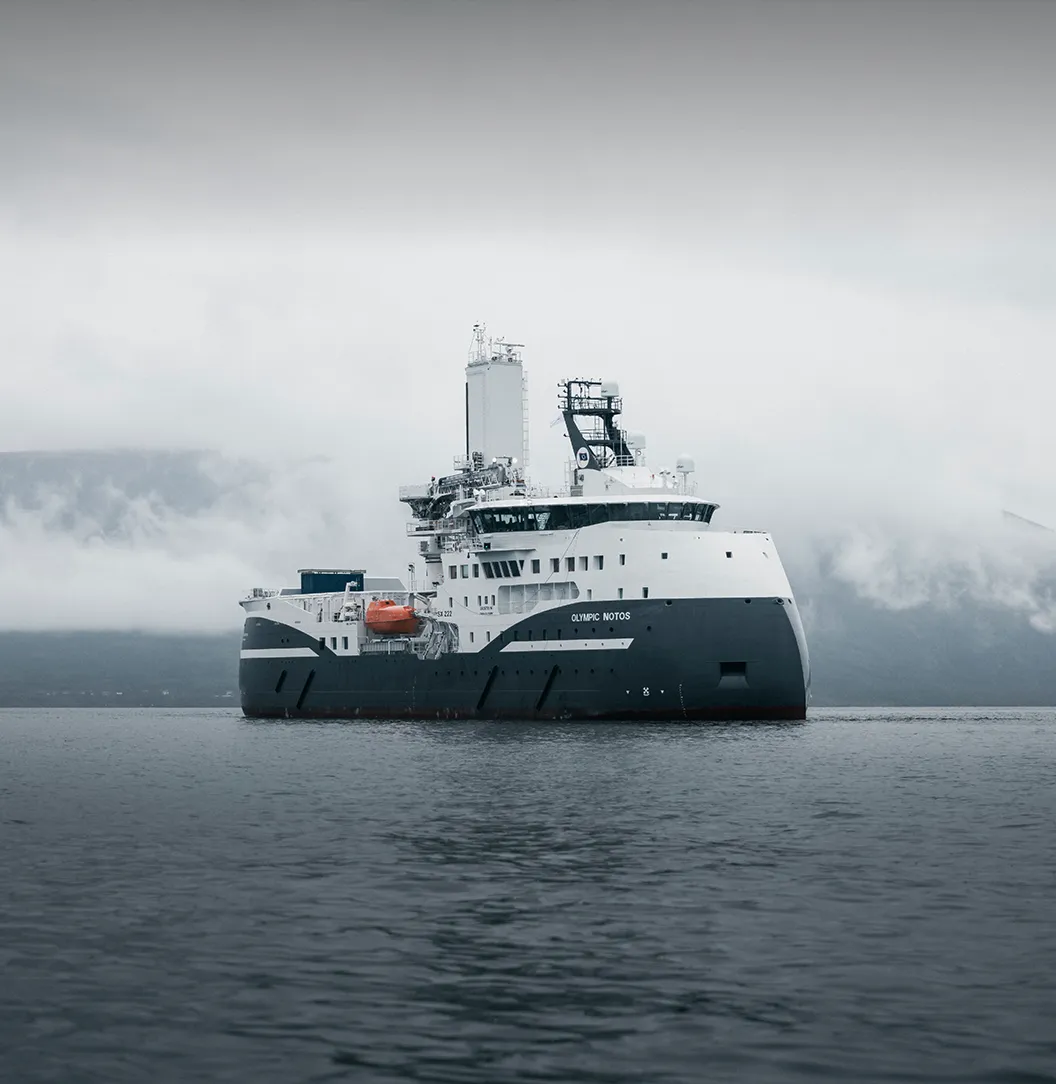
Olympic Boreas and Olympic Notos represent an important step in that development. Designed around high operational efficiency, the two CSOVs combine advanced vessel design, hybrid power solutions and energy management technologies to reduce energy consumption and emissions while maintaining the safety and operational performance required offshore.
But building more efficient vessels is only part of the work.
Improvement also starts with understanding where the impact comes from.
In 2024, Olympic completed a Life Cycle Assessment of Olympic Boreas, providing greater insight into the vessel’s environmental footprint throughout its lifetime. That knowledge can help identify where further improvements can be made- not only in today’s operations, but in the vessels and solutions developed next.
Small Improvements Add Up
Not every step towards lower emissions comes from a major technological breakthrough.
Across the fleet, progress is also being made through continuous improvements to how vessels are operated and maintained. Increased use of shore power, low-Sulphur fuels, energy monitoring, equipment upgrades and hull maintenance all contribute to reducing energy consumption and environmental impact.
At the same time, Olympic continues to prepare for technologies and fuels that may become increasingly important in the years ahead.
Because vessels operate for decades, improving environmental performance is not only about what works today. It is also about maintaining the flexibility to adopt better solutions as they become available.
Sustainability is Also About People
But a sustainable company is about more than its environmental footprint.
Olympic’s vessels may be some of the company’s most visible assets. But behind every operation are the people who make it possible.
Creating a safe and attractive workplace is therefore an important part of Olympic’s long-term development. Training, competence development and employee engagement help people continue to grow alongside the increasingly advanced vessels and operations they work with.
At the same time, Olympic continues its efforts to strengthen diversity and create an inclusive working environment – both offshore and onshore. The ambition is straightforward: people should be able to work safely, develop their capabilities and build long-term careers at Olympic.

Building Trust Through Responsible Business
Sustainability also depends on how a company conducts itself.
As Olympic grows and operates across increasingly complex international value chains, clear standards for responsible business become increasingly important.
Policies, anti-corruption measures, supplier requirements and clear governance structures help create accountability across the organization and its relationships with customers, suppliers and partners.
The goal is not simply compliance. It is to build the transparency and trust required to operate responsibly over the long term.
A Direction, Not a Destination
There will always be another improvement to make.
Technologies will develop. Fuels will change. Environmental requirements will become more demanding. Offshore operations will evolve. And expectations of responsible businesses will continue to grow.
For Olympic, sustainability is therefore not a destination or a single target. It is a direction for how the company develops. Towards vessels that use less energy. Operations that make better use of resources. A workplace where people can develop and thrive. And a company that continues to act responsibly as it grows.