The Next Vessel Starts with What We’ve Learned

How do you design a vessel today for an offshore industry that may look very different tomorrow?
Offshore Operations are Constantly Changing.
Projects are becoming more technologically advanced, environmental expectations are increasing, and vessels are being asked to perform efficiently across a wider range of assignments. And the pace of change creates a particular challenge. Offshore vessels are built to operate for decades. During that lifetime, markets will evolve, technologies will develop and customer requirements will change.
For Olympic, the answer is not about trying to predict one exact version of the future. It is about understanding where the industry is heading, staying close to customers and operations, and building the flexibility to evolve with it.
Every operation adds to that understanding. Decades of experience offshore, close relationships with customers and insights from the people working at sea provide valuable lessons about what works, where limitations arise and where new needs are emerging. Combined with close collaboration with ship designers, yards and technology partners, those lessons continuously feed into the development of the Olympic fleet.
The ambition is not innovation for innovation’s sake. It is to build vessels that give customers more possibilities offshore: greater flexibility, strong operational capability, lower energy consumption and better working and living environments for the people onboard.
That thinking helped shape Olympic Boreas and Olympic Notos – two of the company’s most advanced vessels to date.
Olympic Achieves International Recognition
And the industry has taken notice. Olympic Boreas has been nominated for the “Ship of the Year” award and, in 2024, was named Best CSOV by Baird Maritime.
In its assessment of the vessel, Baird Maritime wrote:
This Norwegian effort has produced the most modern and capable, multi-purpose CSOV on the global offshore renewables market. As an offshore support, construction and maintenance service vessel, it can perform a multitude of roles in almost every imaginable marine situation.”
For Olympic, the recognition reflects the collective effort behind developing a new generation of offshore vessels. Shipowners, designers, shipbuilders, technology partners and the people working onboard all bring different perspectives to the same ambition: to make the next vessel better than the last.
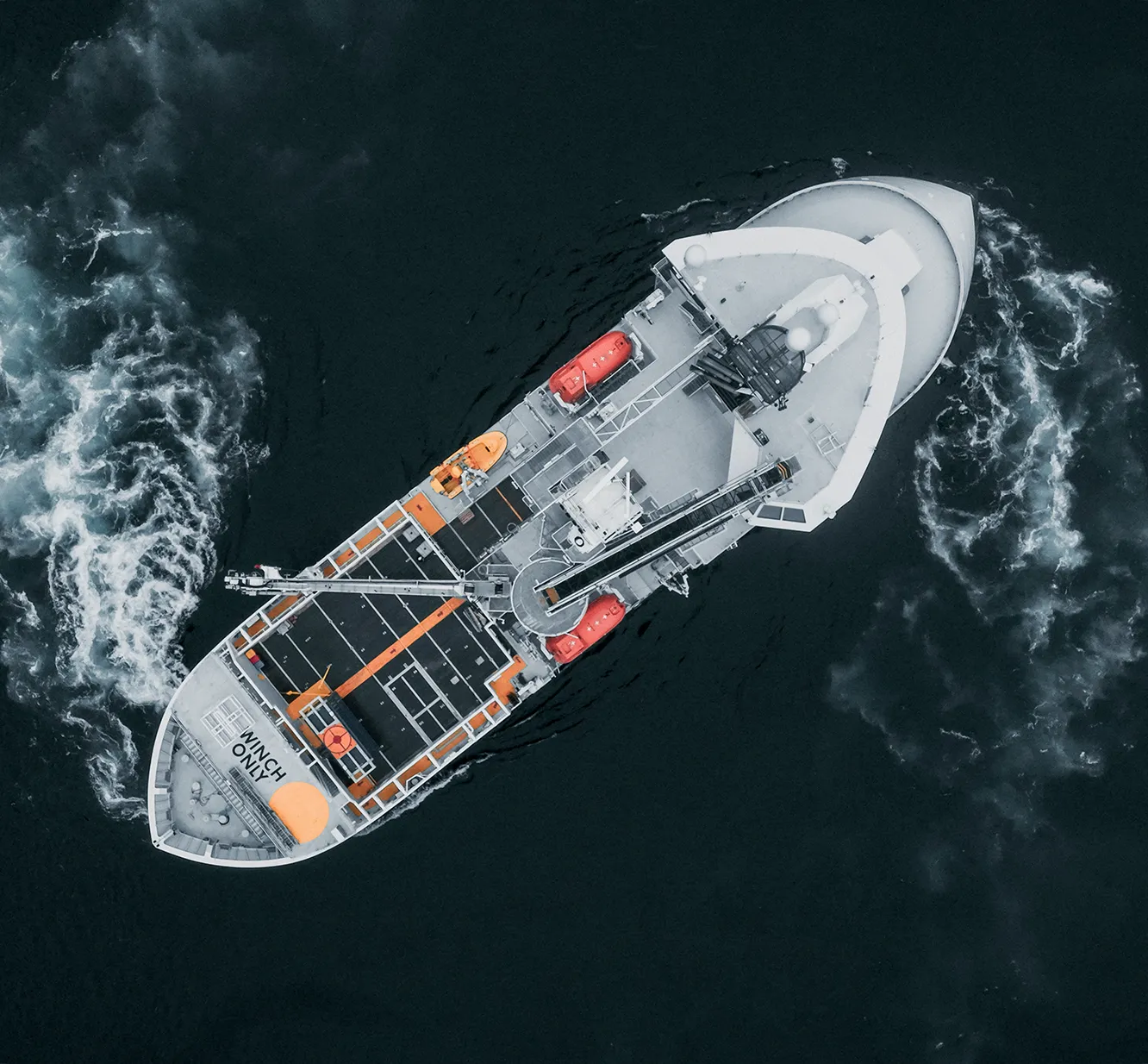
A New Generation: Olympic Boreas and Olympic Notos
That philosophy can be seen in Olympic Boreas and Olympic Notos – two of the company’s newest and most advanced vessels. Developed as sister vessels in close collaboration with Ulstein, both build on experience from previous generations and share a simple ambition: to give customers more possibilities at sea.
Their defining quality is flexibility. Rather than being built around one narrowly defined assignment, the two CSOVs were developed to support a changing range of offshore operations.
More freedom to move between different types of operations. More capability to take on demanding assignments. Smarter use of energy and a lower environmental footprint.
But the next generation of offshore vessels shouldn’t only be better to operate. They should also be better to live on. With daylight cabins, spacious common areas, lounges, gaming rooms and a gym, Boreas and Notos are designed as a genuine home away from home – a place to work, recover, exercise and spend time together.
Designed to Do More
Behind that flexibility are some of the most advanced capabilities in Olympic’s fleet. TWIN X-STERN® provides high manoeuvrability, stability and station-keeping performance, while capabilities such as Walk-to-Work personnel transfer and advanced crane systems expand what can be done from the vessels.
Together, these capabilities give customers greater freedom in how they approach demanding offshore operations, and help prepare the vessels for changing requirements, something that is more important than ever in today’s industry.
Doing More With Less
Greater capability at sea should not have to mean greater environmental impact. As customers face growing expectations to deliver more efficient operations with a lower environmental footprint, the vessels supporting those operations must evolve too.
But reducing environmental impact is not only about the technology available today. Fuels, technologies and environmental requirements will continue to evolve. No one can know exactly what offshore operations will look like decades from now, but vessels can be designed with the flexibility to evolve with them.
For Boreas and Notos, that thinking started at the design stage. TWIN X-STERN®, hybrid power and advanced energy management work together to reduce energy consumption without compromising offshore performance.
Ultimately, building for tomorrow is not about knowing exactly what the future will look like. It is about being prepared to evolve with it.
Boreas and Notos are the latest step in that thinking. They will not be the last.